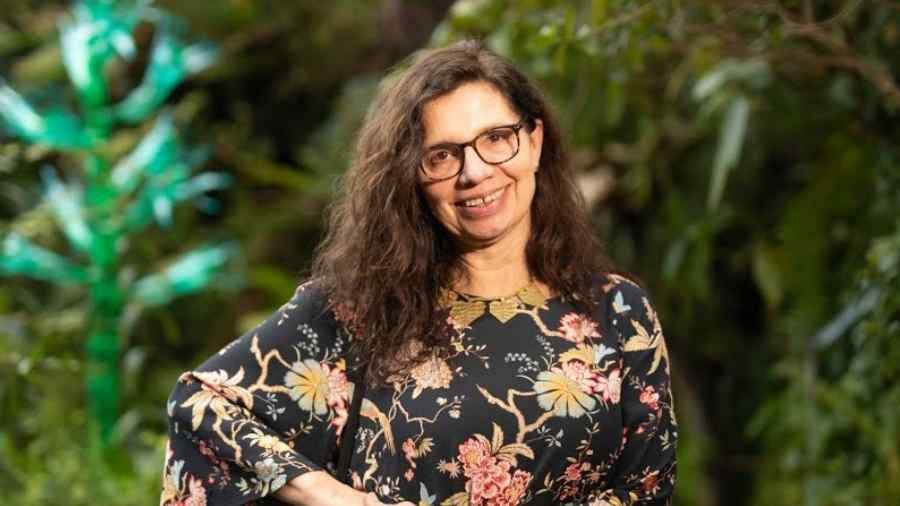
When the name Veronika Richterova is mentioned in the world of modern art, it immediately evokes images of shimmering plastic petals, imaginative recycled sculptures, and ingenious creativity. She is widely celebrated for her remarkable work with PET bottles, transforming discarded plastic into enchanting forms of nature, art, life, and movement. Her artistic practice stands as a bridge between environmental consciousness and aesthetic brilliance. Every sculpture she creates questions consumerism, waste culture, and the way humans interact with materials that outlive our everyday use.
Born in Prague in 1964, Veronika stepped into the art world with a traditional foundation in painting and monumental art. Over time, she evolved into a pioneer of PET-art, a term now often associated with her globally. Her work showcases how even the most ordinary material, such as a plastic bottle, can be reshaped into graceful masterpieces—if touched with vision, patience, and imagination.
Early Life and Educational Background
Veronika grew up in a culturally rich environment, where art and craft were not merely hobbies but living expressions. From a young age, she displayed curiosity for textures, shapes, and material transformation. This curiosity naturally led her to pursue formal art education. She studied monumental painting at an esteemed art university in Prague, where she learned discipline, composition, and visual storytelling. Her grounding in classical skills helped shape her artistic identity long before PET bottles became her signature medium.
During her academic years, Veronika explored painting, sculpture, and mixed media. Her interests inclined toward creating three-dimensional work, and she dived deeper into how light interacts with surfaces. After her graduation, she spent time in Paris for further training, where exposure to European art movements inspired her conceptual growth. The multicultural environment encouraged experimentation and broadened her perception of what “art material” could be.
Transition into PET-Art
The revolutionary shift in Veronika Richterova’s journey began around the early 2000s. While most artists focused on traditional mediums like clay, wood, or bronze, she discovered potential in something unconventional: plastic bottles. What many considered waste, she saw as a treasure box of shapes, textures, and possibilities. PET bottles are transparent yet durable, colourful yet flexible, and incredibly adaptable under heat. Veronika realised this and started exploring their behaviour through cutting, melting, reshaping, and assembling.
Her experiments led to fascinating forms resembling flowers, leaves, sea creatures, lampshades, and entire sculptural ecosystems. What started as curiosity soon turned into a life-long artistic pursuit. She created hundreds of artworks using recycled plastic, and each piece carried an underlying environmental message—beauty exists even in waste.
Artistic Style and Creative Process
Veronika’s artistic process is both technical and poetic. It begins with collecting used plastic bottles from households, events, recycling stations, and global travels. She examines shapes, thickness, and bottle colour because each brand and region produce unique bottle patterns. Some are perfect for petals, others for tree roots, cactus spines, jellyfish tentacles, or feather-like elements.
She then cuts, carves, heats, twists, and compresses the plastic, allowing it to bend into organic forms. In her hands, plastic behaves almost like fabric or molten glass. Heat is a central element in her technique because it softens the material, enabling sculptural manipulation. What emerges is an artwork glowing with translucent vibrance.
Her sculptures often mimic nature. A cactus made of plastic bottles might sway as though growing in a desert breeze. A chandelier built of PET pieces sparkles like crystal droplet arrangements under light. She believes nature and waste should not stand in opposition—rather, art can bring them into a meaningful conversation.
Themes in Her Artwork
The core themes in Veronika Richterova’s work revolve around recycling, nature, consumer behaviour, and environmental awareness. Through her art, she subtly points to the global plastic crisis. PET bottles take hundreds of years to degrade, yet millions are discarded daily. Instead of preaching, she uses beauty as persuasion. People look at her sculptures with admiration and, in that moment, reconsider how they treat waste.
1. Nature Reimagined through Plastic
Nature is frequently the muse behind her PET sculptures. She crafts flowers, coral reefs, insects, sea life, palm trees, and leafy structures. The irony is powerful—nature recreated using the material that harms it. Viewers are compelled to think.
2. Transformation and Renewal
Her art represents rebirth. A discarded bottle becomes a blooming plant; trash becomes treasure. It symbolises how creativity can change perception.
3. Light and Transparency
PET plays beautifully with light. Many artworks shimmer under illumination, turning garbage into glowing luxury.
4. Sustainability Awareness
Her work educates without words. It shows that recycling is not merely a responsibility but an opportunity for invention.
Growth, Recognition, and Exhibitions Worldwide
Over decades, Veronika Richterova’s work has travelled the world. Museums, galleries, botanical gardens, and cultural festivals have showcased her sculptures. Visitors are often amazed to know that what appears to be delicate glass is actually recycled plastic.
Her exhibitions have taken place in various countries, contributing to international environmental dialogue. In tropical-themed installations, she replicates forests and jungles entirely from PET materials. In other exhibitions, her chandeliers and wall art create an immersive wonderland. Many art enthusiasts, students, environmentalists, and global media have highlighted her work as an example of innovation in recycling art.
Her studio is also home to one of the largest personal PET bottle collections. She documents bottle shapes like a researcher, studying global design variations. For her, every bottle carries a story—culture, consumption, branding, and industrial creativity.
Contribution to Environmental Awareness
What makes Veronika extraordinary is not just her art but her mission. She does not create merely to decorate spaces; she creates to spark awareness. Her sculptures are visual reminders of the plastic we discard carelessly. Instead of adding to landfills, she transforms waste into inspiration. Many schools, workshops, exhibitions, and eco programs use her work as an educational tool.
Children watching her sculptures learn recycling through beauty. Adults rethink their usage habits. Designers reflect on sustainable materials. Policymakers recognise how creative action can support environmental objectives. Veronika Richterova shows that art is not only decoration—it is dialogue.
Why Her Work Matters in Today’s World
The global plastic crisis is one of the largest environmental challenges of modern times. Oceans are polluted, animals ingest plastic, and microplastics travel through water and food. Awareness is essential, and art plays a crucial role in changing mindsets. Veronika’s work operates at this intersection.
When people encounter her sculptures, they pause. They feel the contrast between waste and beauty. They wonder how such elegance can emerge from something they throw away without thought. This spark of awareness is powerful. It leads to recycling habits, reuse creativity, and conversations about sustainability.
In addition, her success inspires other artists to experiment with unconventional materials. She proves art is not limited by tradition. A material as undervalued as a plastic bottle can become iconic when touched by imagination.
Techniques, Tools, and Working Environment
In her studio, cutting tools, heat guns, scissors, knives, and experimental heating devices shape her creative space. She often works with PET bottles of different colours—green, blue, transparent, brown, and even rare shades sourced through travel. Heat defines movement in her sculptures. If overheated, plastic burns or shrinks; if controlled well, it curves elegantly like natural leaves.
She assembles pieces with wires, adhesives, or interlocking techniques. Some works are tiny, delicate, and intricate; others are large installations that fill hall spaces. The process demands patience, skill, and technical understanding of plastics.
Human Touch in Her Work
Despite working with plastic—a synthetic and industrial material—Veronika’s sculptures feel alive. The details, curvature, rhythm, and organic forms carry emotional warmth. Her art celebrates the touch of the hand, the play of light, the energy of nature. Each work tells a story of transformation: waste becomes beauty, discarded becomes desired, ordinary becomes unforgettable.
Her personality reflects in her work—curious, playful, mindful, and inventive. She sees the world with wonder, and that wonder breathes into her sculptures.
Inspiration for Artists, Students, and Creative Minds
Many young artists see Veronika Richterova as an example of how innovation begins with observation. A simple PET bottle—found in every home—became the seed of her global recognition. Her journey teaches:
Art has no boundaries of material.
Innovation begins when we question the ordinary.
Sustainability can be artistic, not merely practical.
Creativity is a tool to protect nature.
One idea can change perspectives worldwide.
Art students often experiment with PET materials after learning about her work. Teachers introduce her in classes to demonstrate environmental creativity. Designers explore eco-friendly materials inspired by her concepts. The ripple effect of her creativity is immense.
Future of Her Art and Sustainable Creativity
As the world pushes toward greener solutions, recycling art becomes more relevant. Veronika’s role will grow more significant as awareness spreads. She may explore larger installations, public spaces, collaborations with environmental organisations, or even innovative product designs. Her PET-art movement will continue inspiring future generations.
The future may witness biodegradable PET alternatives or creative upcycling communities influenced by her vision. Her legacy will be remembered not only for sculptures but for shifting how people look at plastic.
Conclusion
Veronika Richterova is more than an artist—she is a visionary turning waste into wonder. With mastery, patience, and profound environmental awareness, she transforms discarded bottles into glowing sculptures that capture the imagination of the world. Her art challenges consumer habits, celebrates nature, and reminds humanity of its responsibility toward the planet.
In a time where sustainability is no longer optional, her work stands as a beacon of creativity and hope. She proves that even the simplest objects carry poetic potential when touched with imagination. From Prague to global exhibitions, her journey inspires both artists and ordinary people to view waste differently. Through innovation and artistry, she reframes plastic—not as trash but as possibility.