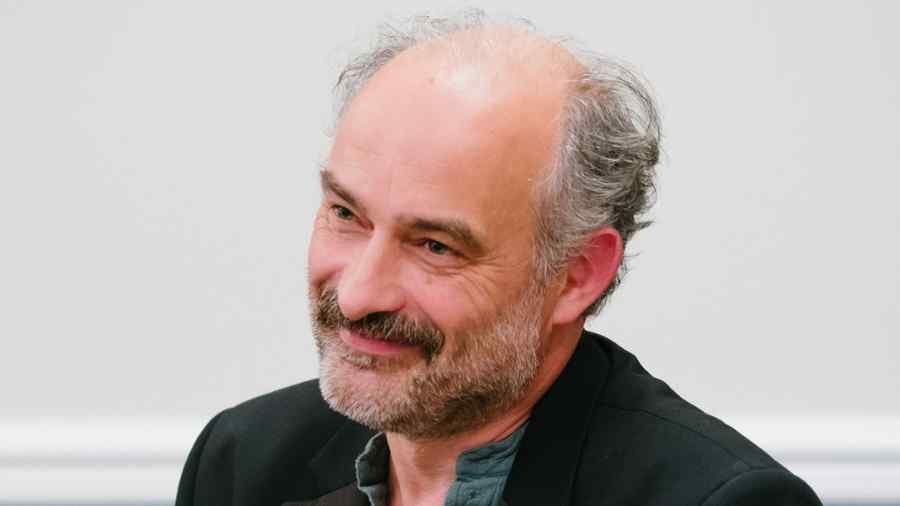
In the vibrant world of British theatre and television, few names embody classical depth and modern versatility quite like Louis Hilyer. An actor whose craft bridges the centuries-old traditions of Shakespearean performance with contemporary film and television storytelling, Hilyer stands as a shining example of the understated yet powerful artistry that defines Britain’s performing legacy. With a career spanning several decades, his performances reveal a rare combination of intelligence, authority, and emotional nuance — qualities that make him a treasured presence on stage and screen alike.
Early Life and Artistic Foundations
Born in 1964 in Coventry, Warwickshire, Louis Hilyer grew up amid England’s cultural heartlands — a region deeply influenced by theatre and literature. Although much of his early education remains private, it is evident from his body of work that his foundations are rooted in rigorous classical training. The depth of his articulation, control over voice, and emotional expressiveness suggest a disciplined background, likely shaped by exposure to Shakespeare and the great traditions of the Royal Shakespeare Company. Hilyer’s voice alone carries the weight of that heritage: clear, resonant, and commanding — perfectly suited to both the grandeur of the stage and the intimacy of television drama.
Career Beginnings in Theatre
Like many of Britain’s finest actors, Louis Hilyer began his career in theatre, where he quickly established himself as a performer of remarkable versatility. His early stage work encompassed roles in Shakespeare’s great tragedies and histories, including King Lear, Macbeth, and The Tempest. His portrayals of Kent and Caliban were particularly praised for their intensity and emotional truth — bringing fresh life to characters often overshadowed by the central heroes. Critics described Hilyer’s performances as “richly textured” and “instinctively human,” qualities that continue to define his acting style today.
The stage remained his creative home, allowing him to explore diverse roles that tested his emotional and physical range. Whether embodying nobility, rebellion, or despair, he displayed a remarkable ability to inhabit a role completely, creating the illusion that he was the character rather than merely playing one. This commitment to authenticity became his hallmark — a quality that later translated seamlessly into his television and film work.
Transition to Film and Television
Louis Hilyer’s transition from stage to screen marked an important evolution in his career. His cinematic debut brought him into collaboration with international filmmakers who recognised his gravitas and range. Notable among his early film credits are Modigliani (2004) and Sky Captain and the World of Tomorrow (2004) — both of which showcased his ability to adapt classical performance techniques to the demands of modern cinema. His screen presence was described as quietly magnetic; he possessed the rare skill of commanding attention without overstating emotion.
Television, however, is where Hilyer’s talent reached its widest audience. British drama has long been a fertile ground for actors of his calibre, and his appearance as Inspector Vyner in the globally acclaimed series Downton Abbey introduced him to millions. As Vyner, he brought a distinctive blend of restraint and authority, proving once again that he could convey complexity with minimal dialogue. The role solidified his reputation as a dependable character actor who could elevate any production with his presence.
The Shakespearean Legacy
One cannot discuss Louis Hilyer without acknowledging his enduring relationship with Shakespearean theatre. His performances in plays such as King Lear and The Tempest highlight his deep understanding of Shakespeare’s rhythm, language, and human psychology. Hilyer interprets these roles not merely as historical figures, but as reflections of universal emotions — love, betrayal, pride, and redemption. Audiences and critics alike have often noted how he transforms classical dialogue into living, breathing emotion that resonates with contemporary viewers.
His portrayal of Caliban, for instance, brought forth the creature’s anguish and humanity rather than simple villainy. Similarly, as Kent in King Lear, Hilyer captured both loyalty and moral outrage with subtle precision. Such performances affirm his place among the select group of actors capable of giving timeless literature a new heartbeat.
Craft, Technique, and Artistic Discipline
Louis Hilyer’s craft is distinguished by a profound respect for language and rhythm. His delivery is deliberate, measured, and deeply musical — a reflection of his background in both acting and singing. According to his professional portfolio, he is skilled in vocal performance across multiple genres, including blues, rock, and classical tenor. This musical sensitivity informs his acting, giving his dialogue a lyrical flow and emotional resonance that few can replicate.
Another defining feature of his technique is restraint. In an era when many actors rely on physical excess or overt dramatics, Hilyer’s strength lies in control. He communicates volumes with a glance, a pause, or the subtle inflection of a line. This minimalist mastery makes his performances particularly powerful in television and film, where the camera captures the smallest gestures.
The Range of Roles and Performances
Throughout his career, Louis Hilyer has portrayed an impressive variety of characters — from noblemen and generals to inspectors and scholars. Each role is infused with the same meticulous attention to detail. He prepares extensively, researching backstories and motivations to create authenticity. Directors have often praised his professionalism and humility — qualities that make him a valued collaborator in both ensemble casts and leading roles.
His diversity extends beyond character types. He has performed in historical dramas, psychological thrillers, literary adaptations, and even modern comedies. Yet regardless of genre, one thing remains constant: his unwavering commitment to truth in performance. He neither overplays nor retreats; instead, he achieves a perfect balance between power and vulnerability — the essence of great acting.
Critical Reception and Industry Recognition
Although Louis Hilyer may not be a household name like some of his contemporaries, his work commands respect among critics and fellow actors. Reviewers often highlight his authenticity, stage discipline, and emotional depth. His ability to transform supporting roles into unforgettable moments has earned him admiration from both audiences and directors. Those who follow British theatre frequently cite him as one of the unsung heroes of modern acting — a craftsman devoted to the art rather than the spotlight.
His association with prestigious institutions such as the Royal Shakespeare Company and National Theatre further cements his credibility. These venues represent the pinnacle of dramatic performance, and Hilyer’s repeated appearances there reflect his status as a trusted and accomplished artist.
Personal Style and Artistic Identity
Beyond his performances, Louis Hilyer represents a particular philosophy of acting — one rooted in humility, preparation, and integrity. He has often expressed through his work that acting is not about fame but about service: the service of story, emotion, and truth. This mindset aligns him with Britain’s great acting tradition, where discipline outweighs glamour and excellence is pursued quietly rather than proclaimed loudly.
His distinctive features — a strong presence, expressive eyes, and commanding voice — enhance his portrayals of authority figures, yet he remains equally capable of conveying tenderness and vulnerability. This emotional duality allows him to bridge worlds, moving effortlessly between the classical and the contemporary.
Influence and Legacy
Louis Hilyer’s influence extends beyond his individual performances. As a veteran of both stage and screen, he represents the continuity of British acting tradition in an industry increasingly defined by global trends and fleeting fame. Young actors looking for a model of professionalism and artistic integrity could do no better than study his career. He embodies the idea that success in the arts is not measured by celebrity, but by consistency, dedication, and respect for the craft.
Moreover, Hilyer’s longevity itself is a testament to his skill. Few actors sustain such a balance between theatre and television over decades without losing artistic depth. His enduring relevance proves that talent anchored in classical foundations remains timeless.
The Man Behind the Roles
While much of Louis Hilyer’s personal life remains private, this discretion only adds to his allure. Unlike many modern performers, he maintains a clear distinction between his professional identity and his private world. This separation speaks volumes about his priorities: the work comes first. It also aligns with his broader artistic ethos — that the performance, not the performer, should command the audience’s attention.
His Coventry roots perhaps explain this groundedness. Coming from a city known for resilience and renewal, he carries the same steady strength into his career. Every role he inhabits bears the mark of authenticity — a reflection of a man who understands both the power and the responsibility of storytelling.
Continuing Relevance
In recent years, Louis Hilyer continues to work actively across theatre and screen, demonstrating that his artistry remains as potent as ever. Whether performing in classic revivals or modern dramas, he brings an unshakable sense of professionalism. As streaming platforms expand opportunities for British actors, audiences worldwide are rediscovering his earlier work and appreciating his understated mastery.
The future holds promise for further exploration of his talents — perhaps in more cinematic or directorial ventures. Whatever the path, one thing is certain: Louis Hilyer will continue to enrich the cultural landscape with performances marked by intelligence, elegance, and emotional truth.
Conclusion
Louis Hilyer stands as a beacon of British acting excellence — a performer whose life and work remind us of what true artistry means. His journey from Shakespearean stages to global television success illustrates that talent, discipline, and integrity never fade. In an entertainment world often obsessed with fame, Hilyer remains devoted to craft. His performances linger in the mind not because they seek attention, but because they embody truth. For audiences who value substance over spectacle, Louis Hilyer represents the very best of what it means to be an actor.