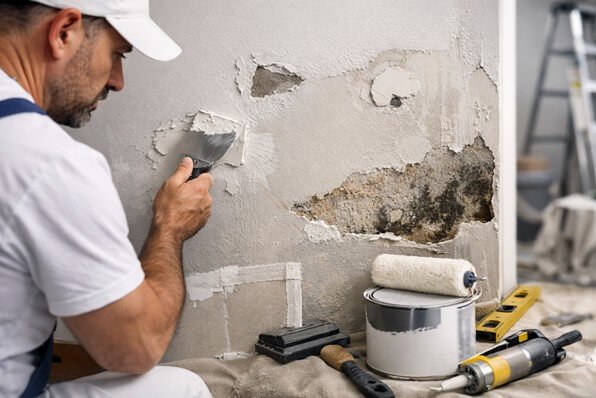
How Repairs Matter Before Painting
Clean walls give you better results. You get stronger adhesion when the surface is solid. You avoid early peeling when cracks and dents are fixed correctly. Repairs shape the final outcome because paint only performs well on stable material. This is why professional painters treat repairs as a required step. You start with a surface that is ready for clean color and even texture.
How Pros Inspect Your Walls
Inspection drives the repair plan. Professionals check every wall for cracks, holes and loose material. They look for stains that signal moisture problems. They check corners, trim and ceiling lines because small damage often hides in these areas. They check past paint layers to see if any section is flaking. This inspection helps them decide what needs sanding, what needs patching and what needs deeper attention. You get a clear process instead of guesswork.
How Professionals Fix Cracks and Holes
Cracks and holes change how paint sits on your wall. Professionals repair these flaws with the right fillers and compounds. They widen small cracks to remove weak edges, then fill them with flexible material that prevents future splitting. They patch larger holes with mesh or backing boards. They smooth the surface until it matches the wall around it. Once dry, they sand again to keep the finish even. You get a uniform look because the surface no longer shows dips or shadows.
How Painters Handle Water Damage
Water damage ruins paint if you ignore it. Stains, bubbles and soft spots show moisture problems. Professional painters identify the source first. They avoid painting over active moisture because it traps water. Once the area dries, they remove damaged material. They cut out sections that are too soft to hold paint. They use stain blocking products on areas with discoloration. This creates a barrier that stops stains from coming through fresh paint. You get results that stay clean instead of showing marks later.
How Surface Smoothing Improves Paint Adhesion
Sanding and smoothing give paint something steady to hold. Professionals remove raised edges from old paint. They level out repairs so the finish does not show ridges. They use fine grit tools to remove gloss from shiny sections. This helps each coat adhere better. Smooth surfaces dry evenly. You avoid streaks because the paint settles the same way across the wall. This step is simple but shapes the final quality.
How Priming Supports the Repair Work
Primer strengthens the repaired surface. Professionals use primer to seal patches, stop color bleed and build a consistent base. The new compound absorbs paint faster than old wall material. Primer balances this difference. It locks in repairs and prevents uneven spots. Professionals choose primers that fit the surface. This could be a stain blocking primer, bonding primer or general interior primer. Once applied, the wall has a uniform base that supports strong coverage. You get a clean color that stays stable.
Final Checks Before Painting Begins
The last step is a full review. Professionals run their hands across the wall to feel for rough spots. They use light to check for shadows or missed sanding. They confirm repairs are dry. They confirm the primer sits smooth. They protect floors and trim before they start applying paint. These checks prevent mistakes. They avoid problems that lead to extra coats. You get a smooth start and a cleaner finish.
Why Working With Professional Painters Improves Your Results
When you work with professional painters, you get repairs handled with skill. You get walls inspected, fixed and prepared with proven steps. You save time because you avoid trial and error. You save money because correct repairs support long lasting paint. Your walls stay strong because the base work protects the paint above it. Each coat sits clean and even because the surface holds it well.
You get a better final result when repairs come first. Skilled painters fix damage, handle moisture issues and shape a surface that supports quality. This process gives you a durable finish that stays sharp for years.
FAQs
What repairs do painters handle
They fix cracks, holes, dents and minor water damage before painting.
Do pros repair drywall
Yes, they patch, sand and smooth drywall to prepare it for paint.
Why is priming important after repairs
Primer seals patches and creates a consistent base for clean coverage.
How long do repairs take before painting starts
Most repairs dry within a few hours, depending on patch size and material.
Can painters paint over water stains
They can after fixing the source and applying stain blocking primer.