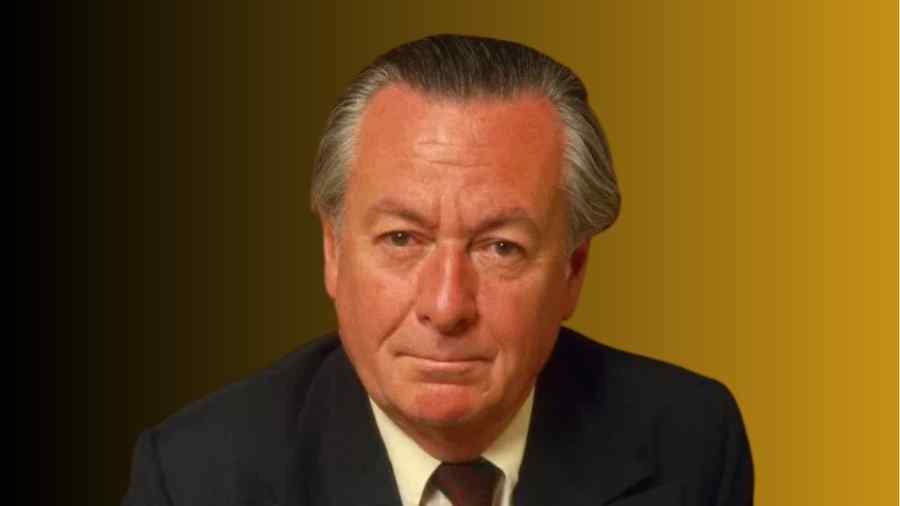
Julian Amery remains one of the most intellectually distinctive and controversial figures in modern British Conservative history. A parliamentarian shaped by war, empire, diplomacy, and family legacy, he carved out a political career that spanned more than four decades and crossed the Commons and the Lords. His life offers a revealing window into Britain’s post-war transition—from imperial power to modern European state—while also reflecting the internal debates that shaped the Conservative Party throughout the second half of the twentieth century.
Quick Bio
| Profile Detail | Information |
|---|---|
| Full Name | Harold Julian Amery |
| Date of Birth | 27 March 1919 |
| Date of Death | 3 September 1996 |
| Age at Death | 77 years |
| Height | Approx. 5 ft 10 in (178 cm) |
| Nationality | British |
| Profession | Politician, Author, Public Servant |
| Political Party | Conservative Party |
| Education | Eton College; Balliol College, Oxford |
| Military Service | RAF and British Army (Second World War) |
| Key Offices | Secretary of State for Air; Minister of Aviation; Minister of State for Foreign Affairs |
| Career Span | 1950–1992 (House of Commons), 1992–1996 (House of Lords) |
| Net Worth (est.) | Not publicly disclosed; primarily public-service based |
| Social Media | None (pre-digital public life) |
Early Life and Influential Family Background
Julian Amery was born in London into one of Britain’s most politically engaged families. His father, Leo Amery, was a towering Conservative statesman and imperial thinker whose career left a lasting impression on his son’s worldview. Growing up in such an environment meant that politics, international affairs, and questions of Britain’s global role were daily topics rather than abstract ideas.
From an early age, Amery developed a fascination with geopolitics and history. This intellectual curiosity would later distinguish him from many contemporaries who focused more narrowly on domestic political management. His upbringing encouraged independent thought, confidence in debate, and a willingness to challenge prevailing orthodoxies—traits that would define his parliamentary career.
Education and Intellectual Formation
Julian Amery’s formal education followed the traditional route of Britain’s governing elite. He attended Eton College, where he demonstrated strong academic ability and a particular interest in history and modern languages. His time at Eton also sharpened his debating skills and introduced him to networks that would later intersect with his political life.
He went on to study at Balliol College, Oxford, a setting known for producing political thinkers and public servants. At Oxford, Amery deepened his engagement with European history, international relations, and strategic thought. Rather than adopting rigid ideological positions, he approached politics as a complex interaction of culture, power, and historical momentum—an approach that later informed his foreign policy views.
Wartime Experience and Its Lasting Impact
The Second World War proved to be a defining chapter in Julian Amery’s life. Before Britain formally entered the conflict, he worked as a journalist and observer during the Spanish Civil War, witnessing first-hand the ideological struggles that would soon engulf Europe. This early exposure gave him a practical understanding of conflict that went beyond theory.
During the war, Amery served in both the Royal Air Force and the British Army. He was later involved in liaison work with resistance movements in the Balkans, including operations connected with Albania. These experiences shaped his lifelong interest in foreign affairs and his belief that Britain’s security was inseparable from developments beyond its borders.
Unlike many politicians whose military service was brief or symbolic, Amery’s wartime role immersed him in strategic realities. The lessons he drew from this period—about alliance-building, intelligence, and the limits of power—continued to influence his parliamentary interventions for decades.
Entry into Parliament and Early Political Career
Julian Amery entered the House of Commons in 1950 as the Conservative Member of Parliament for Preston North. At a relatively young age, he quickly established a reputation as an articulate and intellectually driven backbencher. He was not content to remain silent or merely follow the party line, particularly on issues of defence and foreign policy.
In the early years of his parliamentary career, Amery focused on Britain’s role in the Cold War, defence preparedness, and the future of the Commonwealth. He was sceptical of simplistic narratives and often warned against underestimating geopolitical threats. This made him a respected, if sometimes challenging, voice within Conservative ranks.
Ministerial Roles and Government Responsibility
Amery’s intellectual seriousness eventually brought him into government. One of his most prominent appointments was as Secretary of State for Air, a role that placed him at the heart of Britain’s defence and aviation strategy during a period of rapid technological change. He later served as Minister of Aviation, where he was involved in early decision-making around advanced aircraft development.
He also held posts related to public works, housing, and construction, demonstrating an ability to handle domestic portfolios alongside his better-known interest in foreign affairs. In the early 1970s, he served as Minister of State for Foreign and Commonwealth Affairs, a role that allowed him to engage directly with international diplomacy during a complex era marked by European integration and shifting global alliances.
Throughout these roles, Amery was known for his command of detail and his readiness to engage with long-term strategic implications rather than short-term political gains.
Political Beliefs and Ideological Position
Julian Amery is often described as a Conservative with strong traditionalist instincts, particularly regarding Britain’s historical identity and global responsibilities. He was associated with the Conservative Monday Club, reflecting his concern that rapid social and political change could undermine national cohesion.
At the same time, Amery’s views were more nuanced than simple labels suggest. While critical of aspects of decolonisation, he was not blind to its inevitability. His primary concern was how Britain managed change—whether it did so with foresight, dignity, and strategic planning.
On Europe, Amery’s position evolved over time. He recognised the practical importance of European cooperation while remaining cautious about surrendering national decision-making authority. This balanced, sometimes conflicted stance mirrored wider Conservative debates that continue today.
Personal Life and Notable Relationships
Julian Amery’s personal life was closely intertwined with Britain’s political establishment. He married Catherine Macmillan, daughter of former Prime Minister Harold Macmillan, strengthening his already deep connections within Conservative circles. The couple had four children and maintained a family life that combined public duty with private intellectual pursuits.
One of the most tragic aspects of Amery’s family history was the fate of his brother, John Amery, who was executed for treason after collaborating with Nazi Germany during the war. This painful episode cast a long shadow and underscored the moral complexities of the era in which Julian Amery lived and served.
Later Years and the House of Lords
After losing his Commons seat in 1992, Amery was granted a life peerage and entered the House of Lords as Baron Amery of Lustleigh. In the Lords, he continued to speak on foreign policy, defence, and constitutional issues, bringing decades of experience to debates that often benefited from his historical perspective.
Although his health declined in his later years, he remained intellectually engaged until his death in 1996. His contributions in the Lords were marked by clarity, independence of thought, and a refusal to oversimplify complex issues.
Writing, Thought, and Public Influence
Beyond parliamentary speeches, Julian Amery was also a writer and thinker. His essays and contributions reflected a deep engagement with history and strategy rather than partisan point-scoring. He believed that politicians had a responsibility to understand the past in order to make sound decisions about the future.
His archives and papers are now valued by historians studying post-war British politics, offering insight into internal Conservative debates and the practical challenges of governance during a transformative period.
Legacy and Historical Significance
Julian Amery’s legacy lies not in headline-grabbing reforms but in sustained intellectual contribution. He represented a generation of politicians shaped by war and empire, grappling with Britain’s changing role in a world no longer centred on imperial power.
He is remembered as a serious parliamentarian—sometimes controversial, often independent, and consistently thoughtful. For students of British political history, his career illustrates how ideas, experience, and personal conviction can shape public life over the long term.
Conclusion
Julian Amery stands as a complex and compelling figure in British political history. His life bridged eras of war, empire, and modernisation, and his career reflected both the strengths and tensions within twentieth-century Conservatism. Through intellectual seriousness, public service, and a willingness to confront difficult questions, he left a record that continues to inform discussions about leadership, responsibility, and Britain’s place in the world.
FAQs
Who was Julian Amery?
Julian Amery was a British Conservative politician who served as a Member of Parliament for over forty years and later became a life peer in the House of Lords, known for his work in defence and foreign policy.
What government positions did Julian Amery hold?
He held several ministerial posts, including Secretary of State for Air, Minister of Aviation, and Minister of State for Foreign and Commonwealth Affairs.
Was Julian Amery related to any prime ministers?
Yes, he married the daughter of former Prime Minister Harold Macmillan, linking him closely to one of Britain’s most influential political families.
What were Julian Amery’s main political interests?
His primary interests included foreign policy, defence strategy, Britain’s global role, and the constitutional future of the United Kingdom.
Why is Julian Amery still studied today?
He is studied for his thoughtful approach to politics, his extensive parliamentary record, and his insight into Britain’s post-war transformation.